In these short spotlights, some of our interns who joined us in September 2025 share what they’re working on, how they came to The Pirbright Institute, and what life here is really like.
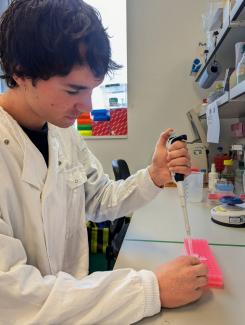
Theo Mitchell
Project Title: Isolation and characterisation of methanogen-specific Fabs from cattle using phage display technology
I am currently completing an integrated Master’s degree in Microbiology from the University of Glasgow. Before starting this internship, I studied English, Maths, Biology, Chemistry, Physical Education and Geography at Higher Level (Scottish A level equivalent).
I went straight to university after finishing high school and chose an integrated Master’s degree because it offered the chance to complete a placement or internship. I wanted to gain meaningful insight into what it’s like to work in industry or academia, as this experience would help guide my future career choices and potential further study, such as a PhD.
I chose Pirbright because it came highly recommended by a former student who had also completed an internship here. The placement offered several advantages, including accommodation, financial support, and the opportunity to contribute to highly regarded research, all of which reinforced my decision.
I work within the Immunological Toolbox team. In my project, I use phage display technology to isolate methanogen-specific antibodies from cattle, including both vaccine-induced and naturally occurring antibodies, in order to better understand immune responses against these complex archaea. This work involves the amplification of antibody genes from cattle immune cells isolated from blood and relevant tissues such as the spleen and lymph nodes.
The most challenging aspect of my internship so far has been troubleshooting in the laboratory when experiments don’t go as planned. However, this has also been one of the most rewarding parts of the experience, as it is incredibly satisfying to overcome these challenges and successfully get an experiment to work. I also had the opportunity to attend the Oxford–Pirbright B Cell Conference in December, which offered valuable insight into academic collaboration.
This internship has significantly improved my time management and communication skills. I’ve learned how to manage my responsibilities effectively and meet deadlines - not only for my own work, but also in consideration of others, as delays can affect their progress too.
The experience has given me a clearer understanding of post‑university academia, including what it’s like to work in research, the pressures involved, and how projects are funded through budgets and grants. While I don’t yet have a definitive plan for after university, I know that I want to remain within the scientific field.
Outside of work, I’ve joined the local athletics team and play football, which helps me stay active, unwind, and meet people in the community. The Institute is located in a quieter area, so having a car can make getting around more convenient.
I would wholeheartedly recommend this internship to other students and encourage them to make full use of the courses, training opportunities, and facilities available at the Institute.
Overall, I feel far more competent and confident than when I started - both in my scientific and academic abilities and in my development as a young professional.
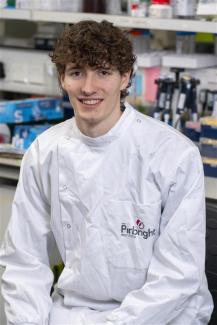
Matthew Curry
Project Title: Investigating T cell responses to bluetongue virus infection in susceptible ruminants: a comparative approach
I am currently registered with the University of Manchester, where I am completing a Bachelor’s degree in Biomedical Science IPE (Industrial/Professional Experience). Prior to commencing my university studies, I completed A-Levels in Biology, Chemistry, and Maths.
Initially, I hadn’t planned to undertake an industrial placement year, but several friends who had completed the programme strongly recommended it. When the opportunity arose, I recognised it as an excellent chance to work alongside senior scientists and explore whether a career in industry might be right for me.
I applied to several placements, but The Pirbright Institute stood out because it aligned closely with my interests in virology and immunology. The opportunity to work within a high‑containment unit and gain experience with a wide range of specialised equipment further reinforced my decision.
My current project focuses on comparing the effects of the Bluetongue virus in sheep and cattle to identify key differences in immune responses between the two species.
The most rewarding aspect of my internship so far has been reaching a point where I can work almost entirely independently. I now feel confident in the techniques I’m using, and my supervisor has shown trust in my ability to carry out work autonomously. There are also many opportunities to attend conferences, including microbiology meetings, and the internship has enabled me to connect with colleagues across the Institute and build meaningful professional relationships.
The initial stages of the internship were challenging, particularly in adapting to the rules and regulations associated with working in a containment environment. However, despite these challenges, the experience has been very enjoyable, and I am looking forward to where my project leads me in the coming months.
This experience has helped prepare me for the future by strengthening my understanding of work–life balance and exposing me to different perspectives. A key lesson I’ve learned is the importance of taking my time in the laboratory, setting clear boundaries, and managing my time effectively.
A piece of advice I would give to anyone considering an internship is to apply for it, take the opportunity, and see where it leads.
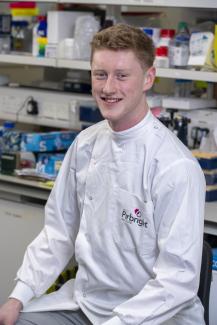
Jessica Miles
Project Title: Understanding the potential of reversion to virulence of rationally attenuated recombinant IBV vaccine viruses
I am currently registered with the University of Southampton, where I am completing a degree in Biomedical Science. Prior to commencing my university studies, I completed A-Levels in Biology, Chemistry, and History.
I was particularly drawn to The Pirbright Institute for several reasons. The project title immediately stood out when I reviewed the available opportunities, and my experience volunteering at a COVID‑19 vaccine clinic at Great Western Hospital deepened my interest in virus research. Although I applied for several internships, Pirbright was the one that most closely aligned with my interests and long‑term career goals.
My project focuses on Infectious Bronchitis Virus (IBV), a coronavirus that affects chickens. The work involves investigating potential vaccine candidates by genetically modifying a weakened form of the virus. The project specifically examines the stability of these genetic modifications and assesses whether they have the potential to revert to a more virulent form.
The most rewarding part of my internship so far has been learning and applying a wide range of laboratory techniques. The early stages were the most challenging, as I was unfamiliar with some procedures, but I overcame this by carefully recording and following detailed experimental protocols.
My team at The Pirbright Institute has been incredibly supportive, providing thorough initial laboratory training. The structured training courses, seminars, student clubs, and journal clubs have also been invaluable, offering additional knowledge and enriching my overall experience.
Outside of work, I enjoy spending time with friends and family, which provides a welcome and refreshing break from my professional responsibilities.
I’m not yet certain what I want to do after completing university, but I hope this internship will help me decide whether a career in research is the right path for me.
My key advice for anyone considering an internship is not to be afraid to ask questions - seeking clarification is always better than making avoidable mistakes. I’ve also learned that mistakes aren’t a setback as long as you identify constructive solutions and learn from them.
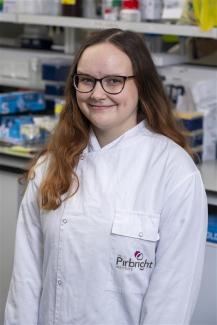

Thomas Lambeth
Project Title: Towards an improved understanding of the dynamics of antigen presentation on follicular dendritic cell networks during arterivirus infection
I am currently registered with the University of Sheffield. Before beginning my degree, I completed A‑Levels in Biology, Chemistry, and Computer Science, along with AS Mathematics and an Extended Project Qualification. I also worked in a commercial laboratory in Northampton, which reinforced the value of gaining hands‑on experience.
As my main academic interest lies in genetics, I chose not to pursue frontline clinical medicine and instead opted for a degree in Biomedical Science. After completing my degree, I plan to apply for the NHS Scientist Training Programme - a three‑year scheme that combines a Master’s degree with specialist training in a specific area of clinical research.
The Pirbright Institute’s internship was my first choice due to my strong interest in genetics. My project focuses on categorising different cell types within lymph nodes to understand how they change during infection with Porcine Respiratory and Reproductive Syndrome virus.
I have thoroughly enjoyed working with my team, who have been incredibly supportive and approachable. One of the main challenges I’ve faced is developing a deeper understanding of the scientific work, as my immunology background is not as strong as that of some colleagues. However, the team has been consistently helpful in supporting my learning and explaining any concepts I’ve found difficult. There are several PhD students in my group, all of whom are friendly, knowledgeable, and always willing to offer guidance.
The training provided by the Institute has been excellent, particularly in terms of access to equipment and opportunities to develop confidence in using it. This has given me invaluable experience of the research environment, as well as insight into the essential support functions that make research possible, including funding, human resources, and maintenance.
One of the most important lessons I’ve learned came from my university tutor, who encouraged me to form my own opinions, take initiative even when uncertain, and learn constructively from mistakes.
My advice to future students considering an internship is to embrace the experience as it comes: stay flexible, go with the flow, and keep an open mind.
Toby Chavasse
Project Title: Improving knowledge on the relevance of biting flies for African swine fever virus transmission
I am currently registered with the University of Bath, where I am completing an integrated master’s degree in biochemistry. Prior to commencing my university studies, I completed A-Levels in Biology, Chemistry, Maths and Latin.
I have always aspired to pursue a career in research. One of the main factors that attracted me to Pirbright was the opportunity to work within an academic research environment and gain insight into publicly funded research and the development of research proposals - an experience that is both enlightening and rarely accessible at such an early stage. The calibre of research at Pirbright was also a major draw, particularly the chance to work with high‑consequence pathogens and gain early exposure to virus research.
African swine fever is a lethal disease affecting pigs and has a major economic impact on many countries. Understanding how the virus spreads is crucial for effective control. While it is known that ticks can transmit the disease in parts of Africa, my project investigates whether other vectors, such as flies, may also play a role. If this form of transmission is confirmed, it would have significant implications for how the UK and other countries design their disease control and prevention strategies.
The most rewarding aspect of my internship so far has been achieving a high level of independence in my laboratory work, including designing and carrying out my own experiments. When these experiments are successful, they bring a strong sense of achievement and personal satisfaction.
Being trained in such a wide range of techniques at an early stage has been an invaluable experience too. Even when a method isn’t directly related to my project, my team encourages me to shadow their work or try new approaches whenever I express an interest. This has helped me build a broad portfolio of skills and knowledge that will be extremely useful throughout my career.
The most challenging moments come when significant time and effort don’t produce the expected results. I manage these situations by reassessing my approach, identifying the next steps, and staying open to alternative strategies. A key lesson I’ve learned is that setbacks are an inevitable part of research, and it’s important not to be discouraged but to remain resilient and keep moving forward.
One of the things I’m especially grateful for at Pirbright is being part of a cohort of interns who are all experiencing research for the first time. Having a group of people who understand the challenges of starting something new has been invaluable - and a great foundation for long‑lasting friendships. I’ve also really enjoyed living in the housing here at Pirbright, surrounded by a community of PhD students and fellow interns who share similar experiences.
After three months at the institute, I am confident that I would like to pursue a PhD and subsequently a career in academia.